Showing posts with label China. Show all posts

Friday, 6 May 2016

India throws ultra dynamic diplomatic card on the Chinese table


India issued visa to multiple Chinese dissidents like Dolkun Isa, Lu Jinguha, Ray Wong to attend the 'World Uyghur Congress' in Dharamsala with the Tibetan exiled leader 'HH Dalai Lama' among others. The controversy surrounding the sudden ultra offensive stance by India against China in terms of reversing the policy on internal non-interference evoked nationalist muscularities. But the delight was short-lived with India cancelling the issued visas on technical grounds. This on-and-off relationship evoked strong criticism from the puerile as well as nationalist ranks. Indian media as usual started reading between the lines from the writings on the wall to assimilate their little understanding of the issue by playing rhetorical series to invoke ultra nationalism. But does it really mean that India itself co-opted a 'planned embarrassment'?
Prudential diplomacy requires understanding the weather patterns before the clouds start to rain. The identification of the characteristics of the clouds on the basis of amount of moisture it contains, capability to create 'thunderstorms' and understanding the 'white-wool like structure' requires abandonment of foolish consistencies. India judiciously applied the 'paradox of value' of Adam Smith in political terms by trading the opportunity of China's veto to Masood Azhar's banishment (being water in Smith's value paradox) with the border agreement with China (being diamond in Smith's value paradox). But how? India cunningly created panic among the Chinese policy makers by signalling a policy shift to accommodate pro-democracy and Uyghur activists from the volatile Xinjiang province under its umbrella. But the sweetness of the deal lies in the fact that they were not allowed to touch the soil, thereby keeping the Chinese to anticipate the possible ramifications of India's future contingency plans like this. Like virginity, a card once played loses its value. Hence, the subtlety dictates keeping the cards closed and keep the foe guessing.
As ends justify the means, the result of such diplomatic overtures can be judged victorious if we happen to secure some legitimate long-term interests vis-à-vis China. A long pending approval to negotiate border agreement, trade disputes and strategic interests should have been secured on the basis of reciprocity of such a generous gesture from our side. The controversy came amidst the visit of our National Security Advisor 'KC Ajit Doval', who is also the plenipotentiary of the Prime Minister on the bilateral negotiations on the border agreement. It is not hard to understand who, how and why dictated such an act of a 'planned embarrassment' and pushed the Ministry of External Affairs in fire-fighting, probably after securing overdue long term interests. A short-term 'perceived embarrassment' may sometimes become inevitable to secure long-term gains. But a cautious approach advises India to keep the Chinese dissidents in close confidence and exploit the opportunities available through them optimistically.Dynamics of diplomacy are surely hard to understand and the usual writings on the wall may not secure legitimate interests due to the ever-changing potentialities of the adversaries and the allies alike. Albert Einstein says 'insanity' is doing one thing again and again and expecting different results every time. Therefore, to quote Mr Doval, “India has a mentality to punch below its weight. We should not punch below our weight or above our weight, but improve our weight and punch proportionately.”

Sunday, 11 October 2015

India’s Foreign Relations and Their Effect on Its Peace and Security


Foreign policy showcases a country’s outlook towards the world as well as the outlook of the world towards it. It strengthens the nation’s frontiers, establishes its prominence as well as secures it domestically to comfortably implement domestic policies and plans. It has been of relevance since ancient times and is carried forward with successive additions and subtractions in its method to secure pre-planned goals.

In the case of India, it started inadvertently with the offset of World War I & II, when the soldiers of Indian army fought neck to neck with the allied forces to keep the central as well as axis powers at bay, respectively. Such moments of intimate bonding at the time of crisis deepened our relationship with the allied participants and secured us long time goodwill. Simultaneously, the participation of few sections of our Indian independence struggle soldiers in the Axis powers to fight against the British Empire secured us good relations with the other side. Socialist as well as communist leanings of our revolutionaries secured close proximity towards erstwhile USSR, Eastern Europe as well as China to some extent. India participated and became the founder member of the United Nations, therefore giving a voice to the cause of independence and securing the trust of international community to protect human rights abuse by the colonial masters. With the advent of the period of decolonization, India secured a hand of friendship with almost all colonized countries ranging from Asia to Africa and thus, India became a virtual leader of the so-called ‘Third World’ because of our participation in their struggle for independence. After India secured independence, our foresighted forefathers decided to stay as a member of the ‘Commonwealth’ grouping, thereby securing us the forum dedicated especially for the United Kingdom’s colonies to strengthen our foreign policy objectives.

How did we secure our interests in the dynamic and fast changing world of that era? The biggest pragmatic move was to announce and establish a forum of ‘Non-Alignment’ with likeminded countries, which established an independent policy towards the bipolar world and thereby quashing the superimposed congruency and dictates of the powerful blocs. It virtually established a third world with India as its leader. Since independence era, India did not support of setting up any pre-conditions for the establishment of bilateral relationships and therefore, we treated everyone equally well, regardless of their political structure. Non-alignment, non-interference, non-colonizer attitude secured us the trust of the marginally snubbed countries, having an insatiable hunger to make them heard in multilateral forums like the United Nations. We carried their voice and tried to secure equality in international operations.. By establishing a close relationship with USSR, we maintained a regional balance of power that helped us during 1965 and 1971 wars and Pokhran nuclear tests in 1974 especially. No first-use policy of nuclear warheads secured us a tag of being a ‘responsible nuclear capable’ nation. In the case of neighbors, India supported the offset of democratic transitions, secured human rights and promulgated peaceful coexistence among the South Asian neighborhood. ‘Gujral doctine’ reinstated our belief in non-interference, no big brother attitude, prominence to bilateral talks as well as mutual trust and respect between India and its neighbors. India’s relations with the West Asia (and Middle East) ensured strengthening of bilateral ties with the Gulf Cooperation Council (GCC) and independent relationships with all the major players in the region and a special support for the cause of Palestine, since 1950s. The goodwill earned during decolonization days and our support for their freedom struggle secured good relationship with the African Union and frequent high level visits as well as Indian technical and monetary support to the region reassures our commitment to the African prosperity. As a fellow member of the BRICS power bloc, India established good relations with not just Brazil but with the whole South American and Caribbean nations which dates back to erstwhile USSR days. Special emphasis on establishing ties with Japan and other South East Asian nations; even to the commonality of struggle against undemocratic Chinese muscle flexing has secured us high respect in the region. India’s relationship with Oceania and Pacific Islands group were strengthened by Commonwealth participation as well as the presence of huge and prosperous Indian Diaspora in the region. Friendship and peace treaties with USSR secured us good relationship with the Eastern Europe and historical relationship with the United Kingdom and Germany, and colonization experience of Dutch, French and Portuguese secured us the trust of West European nations. But in modern times, trade with the European Union guides our relationship to a level of prosperity and mutual trust and respect. In the nut-shell, India secured a well established and goodwill oriented relationship with most parts of the world.

Then, where does the problem lie? Despite establishing and maintaining strong relationship bilaterally as well as multilaterally with the world community, India failed to secure the trust of the South Asian region which is our immediate neighborhood. The region still sees us with an eye of doubt and tries to unite against our ‘perceived’ big brother attitude. Mishandling of bilateral relationship with Pakistan and China from both sides have led to huge suspicion and establishment of power blocs in the South Asian as well as Indian Ocean region. Sometimes, there has been sluggish response to foreign policy threats emanating from our neighborhood from the undemocratic muscle flexing of the adversaries. We also failed to secure prosperity in the South Asian region that may have circumscribed the violence, drug and human trafficking as well as terrorism issues. The sluggish response to the diplomatic moves of our undemocratic adversaries have forced us to open the Indian Ocean for the participation of non-regional members in the name of joint maritime and naval exercises. Our sense of care is being perceived as internal interference which is breeding lack of trust which pushes forward political imbalances and gives huge bargaining power to our neighbors at the cost of our strategic autonomy. Going beyond the region, expectants in the South East Asian regions are gradually disavowing our leadership to secure channels of trade and communication through the South China Sea. India has failed to secure substantial outcomes in its quest to admit itself as the permanent member of the reformed United Nations Security Council. Less emphasis to the volatile regions such as Africa as well as South America and Caribbean is pushing us backward to years in our foreign policy objectives, keeping in mind that these regions could become the next bone of contentions due to the presence of immense natural resources there.

But what are the material responses to our foreign policy that may ultimately help us secure peace and stability in the region as well as domestically? The clear cut policy of India to disengage itself from the political conflict of Sunni-Shia in the West Asian region has secured us long term peace and stability in our region, especially in domestic politics. Non-membership (permanent) in the UNSC has allowed us to abstain from expressing our views on the issues confronting the world community, which otherwise could have had strategic implications on our foreign policy. Being the largest defence equipment importer in the world, India has successfully secured long term peace and domestic stability because interference in India could jeopardize the largest defence market in the world. India has successfully secured a semi-permanent system of alliances to establish a strong balance of power in the Indian Ocean as well as South Asian region, especially to counter the undemocratic rise of China.

But still there is an existence of multiple lacunas in our foreign policy objectives that may prove detrimental to our interests in the future. Strong worded protests to the political structure of Nepal have bred an anti-India feeling among the locals of Nepal, even though India wants to save it from replicating the historical Sri Lankan blunder. Mishandling of relationship with Pakistan from both sides has promulgated suspicion and jeopardized security in the region and most importantly activated the secessionist elements in domestic politics. Over-enthusiasm to establish diplomatic and military cooperation with the West has put our relations with our long term ally, Russia at stake. Little emphasis on the African continent has allowed vested interests to breed in the region which are threatening our strategic interests there. Such vested interests are virtually neo-colonizing the region and embezzling precious natural resources from the region.

The contemporary world is marching towards a diplomatic shift in alliances with the emergence of multiple strong participants in the field of diplomacy. In order to secure our strategic interests in the region as well as in multilateral forums, we need to expand our horizons to include far off and left over places, otherwise the dream of a reformed UNSC would be a ‘faux pas’. For India to take the lead of the region in multilateral forums, promulgating our soft power diplomacy by including various stakeholders and establishing people-to-people contacts even with the world of violence and rampage is required. The road to prosperity passes through the diplomatic channels of communication and ends with securing our strategic interests worldwide. The roads ahead look rosy but before the petals dry, let us travel through it cautiously to achieve our desired objectives.

Friday, 13 March 2015

Boom! Chinese bubble is about to collapse. Is it?


In the words of noted political and economic commentator – ‘Minxin Pei' – “The Chinese bubble is about to burst.” The manifestation of inflated Chinese statistics of imports as well as exports (in some sectors) has been dwindling over the rope of uncertainty.

Why?
- China’s import buddy – Australia, who supplied iron ore and coal like an obedient colony to his imperialist master, has been shrinking its resource exports. (45% drop in coal imports from Australia to China).
- Greece, although saw the arrival of a young, charming and leftist Alexis Tsipras regime is prepared for an exit from EU, which in turn is decelerating the revival process of EU nations and that's why despite sanctions on Russia, China couldn’t milk the opportunity of increasing exports to EU.
- A dopy increase in total debt of up to $17 trillion is haunting banking sector of China.
- A shoddy experiment of permeating democracy in local government with financial autonomy has earned him a debt of almost 40% of GDP which even the proposed 3 trillion Yuan bond swap agreement couldn’t digest.
-Emergence of multiple export oriented power centers like India, USA, Japan, Indonesia etc has demonopolised China’s import machinery and has opened avenues of negotiation for its suppliers like Australia, Africa, Venezuela, Russia etc.

Gone are the days when China could boast of its enlarged chest filled up with money earned out of exports. The equilibrium of import and export has been destabilized. Merely depending on exports for economic growth sidelining developmental initiatives is not feasible for an autocratic rule. Wonder what happens when the people of ‘undemocratic’ China would realize the income gaps after the sun of inflated statistics would stop shining.

Friday, 30 January 2015

When POTUS meets LOTUS

"baahon ke darmiyaan, do pyaar mil rahe hain"

On this 66th Republic Day of India, a special friend and a prospective partner President Obama was the Chief Guest of the occasion. The whole ‘hullabaloo’ in the strategic relationship between India and US was vigorously circumscribed by this visit with breaking away of many old traditional protocols set up by the elitists of the two nations. The invitation scene was much more dramatic as it got sealed within 19 hours (literally) when the news broke out that the Russians have decided to sell Mi-35 helicopters to Pakistan (in November).

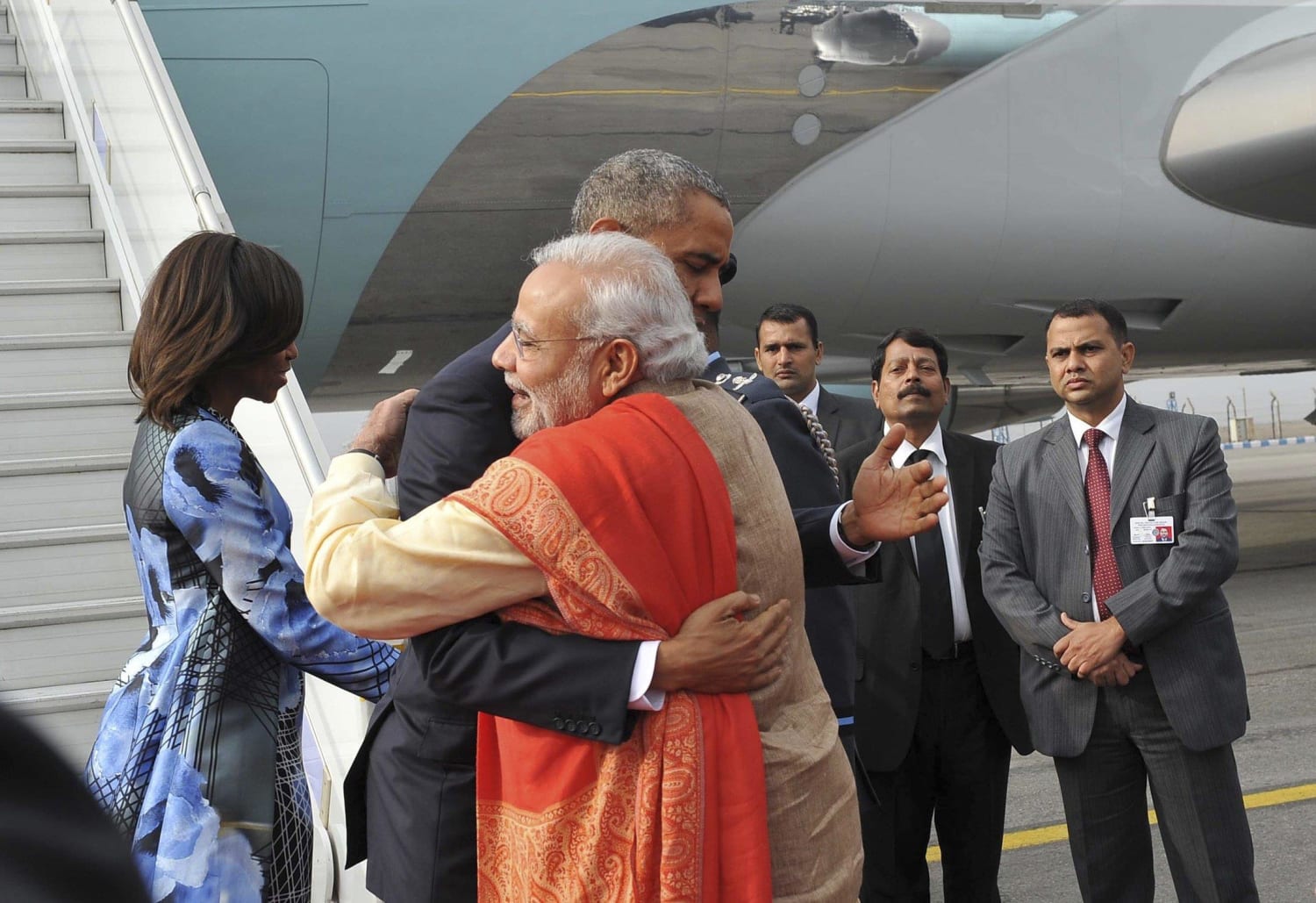
From all the ‘Twitter Bromance’ between Prime Minister Modi and President Obama - bro-hugs between them – ‘Chai Pe Charcha’ at Hyderabad House – Victory of Dress Designer of PM Modi over Michelle Obama’s designer – early departure of Prez Obama to a country where human rights are of supreme importance and where women are more loved and respected (Saudi Arabia), all clouded the ‘Breaking News’ column of the Indian as well as International Media (Barring Fox News for obvious reasons). But what were the substantial gains out of this high profile, orange candy visit?

If we go by media coverage (both Indian as well as International) the two leaders merely talked about Nuclear Deal only (for 3 full days) but that is something wrong in reality. Even though the logjams over the ‘Nuclear Liability Law’ have been cleared through the much needed political push from both the sides, but still it is commercially unviable for American companies to actually incorporate their nuclear plants in India. But the fact remains, that the bone has been ejected out of the throat, ironically by the surgeons who injected it earlier. Although full details of the deal are yet to come but precisely a pool of four insurance companies has been made that will indemnify Rs 750 crores in the case of an accident and the rest amount (said to be Rs 750 crores, total being Rs 1,500 crores) will be allocated by the Government of India. But it should not be forgotten that under the ‘Liability of Nuclear Damages Act, 2010’ (Section 7), there was a provision of creation of ‘Insurance Pool’ but that pool was of value of Rs 1,500 crores and any damage beyond that would be indemnified by the Government of India through another pool called ‘Nuclear Liability Fund’. There was a special ‘National Tracking Demand of Nuclear Material’ by the US officials that if they are providing us the nuclear material then they would like to keep a track on it ‘for lifetime’ to which India responded by saying that we are already following the provisions of IAEA so there is no particular need of this provision. Now, US seem to have agreed over this suggestion too. Skeptics say that it is immaterial if US has agreed over it because the Americans would keep tracking the same through their ‘own ways’, may be a reference to ‘software tracking’.

On the defence and strategic cooperation front, we managed to secure DTTI (Defence Technology and Trade Initiative). Actually it was the current Defence Secretary of US, Ashton Carter (pro-Israel and India) who prepared the framework of DTTI earlier, and as now he has been assigned to the high office, he would energetically push forward the same for its early implementation. Although in India, we have a perennial suspicion over assurance of defence supplies from US (as evident from the fact that we wasted the 10 year Defence Partnership Agreement from 2005-2015 without working on DTTI), but now the co-production model would overcome the reticence on India’s part. DTTI would help in enlarging our defence capacity, building our defence industry and will add up to the manufacturing sector of India.  Four modest projects have started, two aircraft carriers would be produced over the period of next 10-15 years in India and successively we would be helped in the manufacturing of jet engines for which India was eyeing towards a reliable partner since a long time. Still the fact remains that co-development of defence technology cannot have a sustained foundation unless there is a convergence of strategic and security perspectives because they build the much needed mutual trust. It doesn’t mean that we don’t have one with the US, as there are similar interests in Asia Pacific as well as in the Indian Ocean region.

On the issue of ‘Climate Change’ to which US is so much active these days that it points finger at ‘climate change’ for everything, even if it means a slight change in the skin colour of President Obama, the Prime Minister of India has rejected the notion that India would ever succumb to pressure from any country or a person over any issue (a reference to US-China bogus deal on climate change) but he didn’t forget to mention that climate change is a pressure itself for which India is doing enough at its own end by using renewable and clean sources of energy (nuclear energy, solar energy, wind energy etc). The onus also lies on America to give us IPR free ‘Green Technology’ to increase our proportion of clean energy in our total energy consumption.

When talks went on the ‘Totalization agreement’, US unambiguously said it only does ‘Totalization Agreements’ with OECD countries but India has pushed forward one on the pretext of having the same with Finland and Sweden because both these nations have recognized schemes like ULIP, PPF etc as ‘Social Security Schemes of India’ contrary to the belief of US which denies to recognize that India has social security schemes. Taxes for the ‘Social Security Schemes’ by Indians living in US (6-8.5%) contribute to about $ 3 billion (as per Chief Economic Advisor – Arvind Subramaniam) to US exchequer, even though most of the Indians do not take the benefits due to several reasons. Therefore, India was more willing to reach an agreement over this during this visit.

For the trade and business matters, there were usual assurances by India on ease of doing business, transparency and stability in policy, relaxation of taxation procedures as well as clamping down on retrospective taxation provisions but there was nothing US specific to which Prez Obama pledged $4 billion investment in renewable energy sector of India. He also didn’t forget to mention that India’s exports to US amount to merely 2% of total imports of US and imports by India amount to merely 1% of total US exports, which was certainly soothing for Chinese ears.

Chinese media (especially Global Times) started pinching Chinese Government over the ‘Special vision statement of strategic cooperation in Asia-Pacific and Indian Ocean region’ between India and US, clearly seen as a containment of China measure. It contains four major components – Freedom of navigation including in the South China Sea, building up of the trilateral dialogue along with Japan and identify trilateral projects (new component), avoiding the use of force in settling territorial disputes and a marriage of convenience between India’s Act East policy and the ‘Rebalancing policy’ of US towards whole Asia.

All in all, this was a successful visit as it cleared most of the broader issues except immigration reforms of US (but it is justified now because Democrats are in minority in Congress so it is not possible) and the transfer of technology in the field of science. But as the critics can never be satisfied, even if the two leaders would have smooched each other on live TV, so there is nothing wrong in moving at a prudent pace.

PS - That is how PM Modi actually welcomed Prez Obama. #SoSorry
https://www.youtube.com/watch?v=xnhxRcSH1zs

Friday, 17 October 2014

How the Umbrella Revolution of Hong Kong is becoming a pain in the a** for China?


A sovereign state is defined as the one which has complete supremacy over its geographical territory and the laws made by it. The context I am looking for is that literally both the conditions are missing in the case of Hong Kong, which justifies Chinese anecdote of naming Hong Kong as the Special Administrative Region (SAR) of China.

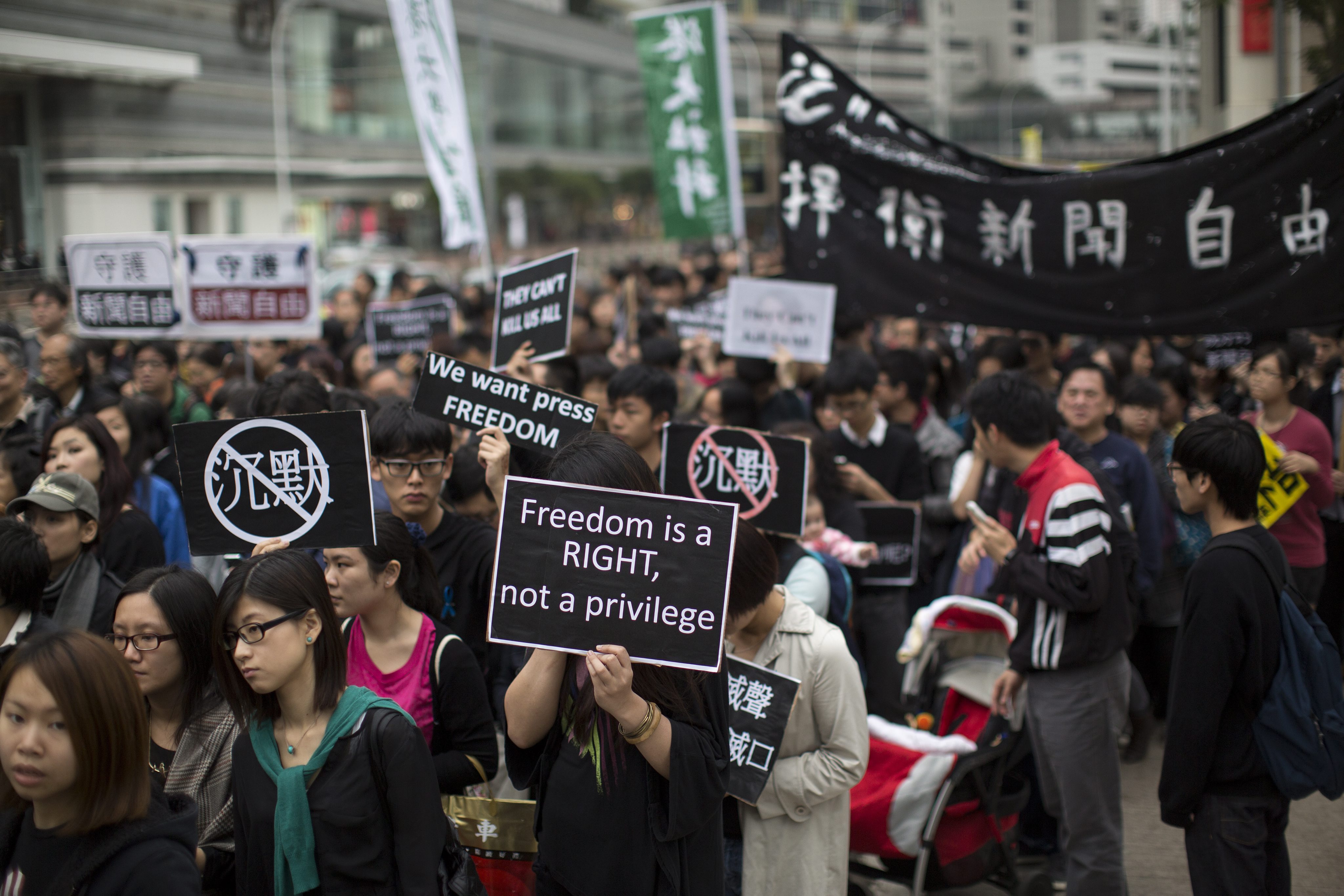
Britain gave reins of Hong Kong back to China in 1997, during which the Beijing gave certain assurances, under what was termed as ‘One country two systems’, Hong Kong was allowed to keep its common law system and assured of greater rights than those prevalent in mainland China, as China would not interfere for at least 50 years in the affairs of Hong Kong except for the decision of the leader of the region (Chief Executive). Residents of Hong Kong hoped that by 2017, they would be able to elect their own Chief Executive to run Hong Kong. China says that there will be no open nominations for the job and only those cleared by the Communist Party would be allowed to contest. This has fueled demonstrations that have turned up to be the biggest public protests in Hong Kong since Chinese rule, also known as the ‘Umbrella Revolution’ (Thousands have deployed umbrellas to protect themselves from the tear gas attack of the police. It had lead some of them to call it ‘umbrella revolution’).

The tension in Hong Kong is after the revision of the recent Beijing’s stand contradicting the original 1997 position (adoption of universal suffrage). The process now has been reduced merely to the vetting of the candidates for the post of Chief Executive of Hong Kong (SAR). In the Legislative Council of Hong Kong, more than half are nominated members, and only handful are directly elected by the constituents of Hong Kong.

Extent of autonomy that Hong Kong enjoys –
Political control is vested with the Communist Party of China. Administrative, financial, economic, legislative, social autonomy has been protected under the basic law or what people call the semi constitution of Hong Kong. The crucial point is the election of Chief Executive of Hong Kong and the political regulations guiding his firm control by the Beijing.

Why Hong Kong wants more autonomy?
This is a revision of the promises that Deng Xiaoping made in the 1980s and following its inscription in the basic law of Hong Kong SAR. The original promise that Deng Xiaoping made when he started negotiating with the British under Margaret Thatcher was that ‘One country two systems’ would include ‘universal suffrage’ for the people of Hong Kong and the deadline for that was given as 2017. Recently the National People’s Congress, which is the Chinese Parliament, has passed a resolution stating that the 2017 elections will be controlled by nominations and there will be a vetting process of the candidate of Chief Executive of Hong Kong SAR.

Therefore, there is a kind of frustration in Hong Kong people which is generated with a lot of factors –
  •  Growing social inequality – Hong Kong has crony capitalism much like Russia (Hong Kong topped ‘The Economist’ list of Crony Capitalist Index, beating Russia), where huge wealth is dominating and the people of Hong Kong are not having basic economic rights. For example – Buying even a small house is a dream for majority of the Hong Kong people.
  • Successive migration from mainland China (Hong Kong people find them inferior).
  • Faith in the Government is at all time low (after the Chief Executive’s stand on Hong Kong’s autonomy).
This is in the nature of democratization to demand not just the political reforms but breaking up the structures of domination like we have seen in Taiwan (Reduction of Kuomitang Party’s economic control) and all the new countries that came up post Soviet disintegration, especially Eastern Europe.

Major groups taking the lead –
Hong Kong Students Federation, Young school students, Group of democrats (Occupy Central with peace and love) are some of the independent groups yearning for a common cause of greater transparency and autonomy in the internal affairs of Hong Kong. There are differences between these groups and the movement is largely ‘leaderless’ and there is no one point of target that can be said about the protests in contrast to the ‘Sunflower protest’ that took place in Taiwan few months ago. The younger protesters have pushed the matters to the forefront and they have sort of forestalled the old style of democrats like Martin Lee and party (although he is also active). The new style has been adopted because the tear gas and pepper sprays were used against the protesters which forced the ordinary Hong Kong people to come at the protest site. The new protesters may compromise on certain cases while continuing their protests to achieve the ultimate goal of real autonomy in the near future.

How China justifies this movement as illegal and unconstitutional?
Beijing is ready to follow the letters of the ‘basic law’ of Hong Kong, but not the spirit of it. Beijing proclaims that the demands of the protesters did not accord with what the basic law or the semi constitution (Hong Kong’s constitution) stipulates. The demand of universal suffrage has been accepted by China but the protesters are asking for the transparency and rationality in the selection of candidates via the process of direct elections, which is neither the part of basic law/constitution nor what the leaders have said anytime during negotiations with the British.

History of Hong Kong Protests –
In 2003, Hong Kong protested against Article 23 which was a security related law that impinged on their freedom and pressured the government to shelve it.

In 2012, they protested against the education plan, which made certain text books compulsory that censored out Tiananmen Square like incidents completely and it was seen as the communist brainwashing.

People’s Republic of China has not declined the promise of ‘Universal Suffrage’ and they have not taken a hard line despite the nature of the government in Beijing. Protesters are asking for the resignation of Chief Executive Leung Chun-ying that could happen later but not immediately as it would mean a loss of face and de-legitimatize the process of elected officials.

When Hong Kong was handed over to China, it was seen by the British as a gateway to China on economic grounds but contemporarily the relevance of Hong Kong has declined with the emergence of Shanghai as the new economic hub. This had given a certain level of angst to the ordinary people of Hong Kong that their specialness seems to be eroding and the interests of the international community especially the British is declining with regards to Hong Kong's cause.

Why majority of HONG KONGERS oppose these demonstrations?
According to a poll, 46% of Hong Kong people do not support the pro-democracy movement, while only 31% supported the same. 47% of the youngsters (Below 24 yrs of age), 21% of people in the age group of 40-59 years support the cause too. This all depends on how the protesters, majorly the youngsters identify the core issue which is the demand of ‘direct elections’. The young protesters are influenced by the Occupy Wall Street, Tehrir Square, Jasmine Revolution (start of Arab Spring), Sunflower movement etc.

Irony is that the business community also does not support the pro-democracy movements as they feel that democracy would not be suitable for the elite class who share a good reputation with Beijing on administrative affairs of Hong Kong. President Xi Jinping met Hong Kong tycoons on September 26th to discuss the Hong Kong state of affairs.

How China will deal with these protests?
China has backed the decision of the Hong Kong police to use tear gas and pepper sprays against the protesters which show a shadow of China’s aggressive stand during the Tiananmen Square incident of 1989. One is the factor of Chinese nationalism and the emphasis of Premier Li Keqiang and President Xi Jinping’s policy of ‘One country’ rather than ‘Two systems’. Before becoming the President, Xi Jinping was the chairman of the leading small group on Hong Kong and Macau affairs, so as Vice President he has handled Hong Kong and Macau for five years and he is quite aware of the situations of these two SARs. Through Hong Kong, China will give a strong message to the West to back off from their internal matters (as Hong Kong has been the key spying port of West throughout the Hong Kong’s history) with the policy of iron hand and velvet glove.

China, rather the world community would never desire for any instability in Hong Kong because of it being a ‘tax haven’ i.e. a financial holiday spot for oligarchs of the West as well as China. They would never want to disturb their hard earned money by risking their investments in Hong Kong through violent revolutions, so it is absurd to believe that CIA is directly funding 500,000 protesters on the roads of Hong Kong through its various NGOs.

Worries of China –
China is worried that the Hong Kong protests will embolden the protests in the mainland like in Xinjiang (Uighurs community as Rebbiya Kadeer criticized Hong Kong situation and asked Uighurs to buckle up for the future war of independence) and Tibet. Also the future of Taiwan’s annexation also depends upon how China handles the Hong Kong situation with the idea of ‘One country and Two systems’ deal originally proposed by Taiwan in 1978. Taiwan’s proposal actually materialized with Hong Kong through the negotiations with British but China’s actual target was Taiwan for the reunification of China and Taiwan. But now Taiwan is not interested in the idea proposed by them in 1978 as they have nothing much to gain but have substantial things to lose if they reunify with China. Taiwan’s President Ma Ying-Jeou is also critical of the idea of reunification now especially after the response of China to the recent Hong Kong situation.

Future of China –
Amid growing bourgeoisie in China (150 million out of 1.4 billion population), they are demanding larger share of power structure. Communist Party introduced the elections at the village level even though the communist party’s base is at the county level (Tehsil level). China has to pacify the growing middle class and the voices of dissent through US President Franklin Roosevelt’s policy – “Speak softly and carry a big stick.”

The best thing about future is its nature of uncertainty. Therefore we have to see if Communist Party of China is willing to share power with the people or would it repeat the horrifying episodes of Tiananmen Square like incidents in all the conspiring parts like Xinjiang, Tibet and Inner Mongolia.

Thursday, 9 October 2014

'Kem Chho' Mr Prime Minister? - President Obama


One of the most anticipated visits of Prime Minister Narendra Modi was to the United States that ended up early this month. Anticipated one because this is the same US which denied him a visa earlier in 2005 for the alleged violation of human rights/minority rights for his 'alleged' role in 2002 Godhra riots. Now, the times have changed, the visa seeker CM Modi has turned out to be PM Modi in the run up to the world's biggest democratic elections ever.

Although Obama Administration was pre-occupied with internal as well as external issues, but they showed apparent interest in building new ties with India. It is because, the world has understood that PM Modi is a forceful personality, decisive, capable to take hard decisions and also business friendly. All these templates made it clear that Americans were very much looking forward to engage with the new powerful Prime Minister of India.

Prime Minister Narendra Modi went there with a tag of political as well as economic salesman, carrying brand India in his baggage to the far off the North-West Atlantic Ocean. Narendra Modi's departure statement carried 1/3rd mention to the meeting with President Obama, signaling other significant issues that would come on the table of negotiations during the bilateral talks.

The departure statement can be construed as the marking of start of Indian Renaissance era, and less of geostrategic angle to it. The visit of the United States was perfectly synchronized with the September 25th launch of 'Make In India' campaign to communicate that India is not merely a market now, and it is the upcoming hub of manufacturing. He further advocated his 'Make In India' vision to the US Business community by enlightening the importance of investing in India with the vision of 3D's - Democracy, Demography and Demand. In the strategic point of view, his statement clarified that India wants to be a bridge between the West and the East and at no circumstances, India would be pressurized to make a choice between the two. His article in the Wall Street Journal after his immediate arrival, made it clear that we are interested to re-energize the bilateral relation which was in a state of stagnation from the past few years. In the end, the efforts concluded with the relationship coming on track of incremental improvement with few small steps and big leaps.

The driving force behind the visit were two important issues -
  • First was the act of rebalancing visit of Chinese President in the same month of September.
  • Secondly, PM Modi is the new 'Head of the State', so there were a lot of contemplations regarding him in the West.
It was intended to be a transformational visit from the Indian side, and not from the US's side as Assistant Secretary of State for South Asia Nisha Biswal made it clear that US is not looking for a transformative action in this visit. But the Indian expectations of transformational visit didn't materialize in reality. To look at the visit in the context of deliverables, there was nothing substantial on the papers, but off the track, it spread the gospel that Modi era has begun and India will have effective governance, rule of law and predictability in the market, that the businessmen expect.

Liberals complained that major irritants were not discussed in detail like Solar equipment export to India on which US moved to WTO, IPR issues, Federal Aviation Authority of US downgrading Aviation Safety Ranking of India (DGCA), Federal Drug Administration clamping down on Indian pharmaceutical companies like Ranbaxy, Doha Round of Conference on Food subsidies (WTO FTA), impasse over the wrinkled Civil Nuclear Liability Act etc. Liberals also complained that India kept on adding task forces and working groups in this high profile visit too, which was not necessary as it could have been done at the bureaucratic level too and there was no need for a Head of the State visit for it.

Although, the visit should not be envisioned in the context of financial deliverables, but also to the intent that has been imparted through the momentum of forwarding the bilateral relationship. Both countries extended the Defense Cooperation Agreement for another 10 years, which was about to expire in 2015. US agreed for a comprehensive investment strategy in Indian infrastructure, especially building up 3 new smart cities at Ajmer, Allahabad and Vizag.

Joint statement by the head of states of both nations called for an agreement in near future that they will try to resolve the differences over the Civil Nuclear Liability law and America originated nuclear reactors will produce nuclear power in energy hungry India soon. Prime Minsiter Modi also made it clear that he is not against the Free Trade Agreement but he also wants to push his case in the WTO. President Obama looked towards increasing the bilateral trade from current $100 billion to $500 billion in the times to come.

Addressing the business community in US, PM Modi said, " I'm going to reform the policies and processes to make it easy to do business in India." These were the two major issues of US investors as they saw 'Policies' = Never meant to be reformed and 'Processes' = Bureaucratic red tapism. He also said, " You people can come to make money in India, we don't expect you to come and not make money, businesses are born to make money." Such a statement ran like a music to the ears of US investors as it was an out of the line statement by an Indian PM ever, indicating the pro-business image of the head of the Government of India.  But US investments would be guided by the time when Indian industry would start investing seriously and begins to place faith manifestly in Indian market.

The biggest task for which Prime Minister Narendra Modi took out a lot of time is to unite the Indo-American community and build it up as a powerful group to use them in the case of need for lobbying for national interest of India. It was inspired by the Jewish diaspora and their activities that gives legitimacy even to the illegitimate actions of Israel by the US.

Finally, the relationship has been reset at the highest level and the sourness of despair that was prevalent in the bilateral attitude has been neutralized up to some extent. Next few years, especially 2016, when the new President would be sworn in the US, would guide the future course of action. Till then, both India and US do realize the fact that they need each other at least for the next two decades to balance the strategic equations crossing each other's path and destiny.

Thursday, 25 September 2014

Happy Birthday Narendra Modi. With love - Xi Jinping


When we talk about India and China, the first thing that is highlighted in our minds is that these two giants contribute 2/5th to the total population of the world. Therefore, a Chinese President’s visit to India (after 8 years) bewitched global media.

For China, India is a part of its South Asian policy which itself is a part of its peripheral diplomacy. But for India, the visit embarked the biggest objective of including China in Indian economy to achieve the developmental goals. As per World Bank estimates, India requires $110 billion investment in infrastructure to come at par with Middle Income countries or we can say that India requires $1.6 trillion investment in infrastructure over the next 10 years to prove his metal in the geopolitical arena.

To make the visit a success, Indian Prime Minister Narendra Modi made personal gestures to the Chinese President by breaking various protocols (the same gesture he received from Japanese PM Shinzo Abe during his Japan visit). India knows that Xi Jinping will be in power at least for the next 8 years and he is very powerful in China and almost projects himself as not only the President but also as the ‘Chairman’ of China, so it was important to lure him through such gestures. Unfortunately, the border incursions by the PLA of China breed suspicion and diverted the purpose and objective of the visit and brought security issues back to the forefront. Prime Minister of India raised the border issue with China for the first time ‘publicly’ and categorized it as the foundation of overall Sino-India relationship. In return, Chinese President used an encouraging formulation with regards to the border agreements in the joint statement by calling to settle the boundary disputes at the earliest. It is an unusual formulation with respect to a Chinese President, irrespective of the actual delivery of the promises.

Absurd claims by the Chinese consulate of Mumbai, of Xi Jinping planning to invest $100 billion in India (when its total investments worldwide is $80 billion) and thereby Indian media going berserk over the issue of reduction in the contemplated investments disappointed Indian masses. There is a huge difference between investment and supply contracts, therefore only MoU were signed and China will only realize the objective of investing $20 billion in India over the next five years. Moreover, Chinese investment in India will come in the form of ‘Investor Funds’ (usually 5-10 year) which will create production capacity in India and not in the form of ‘Sovereign Funds’ (usually 30-40 years) which creates infrastructure. But it’s reasonable because sovereign funds take time to negotiate.

Two issues drive China’s foreign policy in Asia Pacific region –
  1.       The very serious economic difficulties being concealed by China which is weakening the Chinese economy week by week.
  2.     Chinese isolation in Western Pacific region. One after the another frictions from his neighbors, and over arching it is the US’s strategy of a rebalance, which is on hold but not gone till now. China has a nightmare that it will solidify when India will join US as an ally in the region.


But China also contemplates that India is a very independent player with a sense of strategic autonomy and India will never be a part of any camp. This is soothing for Chinese ears.

Despite being his most ambitious project, China didn’t talk about the Maritime Silk Road project except at a very low key and not at all in the official address to the media because it knows that India is not willing to buy it, but on the BCIM corridor (Bangladesh-China-India-Myanmar) issue, China has got a positive reply from India. Chinese MSR project is actually a repost to the American rebalance and it is busy to garner support from wherever it can. It got enough support in the Indian Ocean but Western Pacific region didn’t give him enough leverage. Also, India has also come up with MSR’s counter, with a project named MAUSAM/ MAWSIM (in Arabic) – Maritime Routes and Cultural Landscapes. It aims to reconnect and re-establish communication between countries of the Indian Ocean and reinvigorate the traditional sea links and cultural landscapes.

China will upgrade Indian Railways, supply us bullet trains, set up Industrial Parks, especially in Maharashtra and Gujarat. But there is a hurdle in the trade balance too, because Chinese banks are very reticent to lend to Indian Corporate houses (Chinese investments in India currently lies at $415 million) except to blue chip companies like Reliance, and there is no direction from Govt Of China to them to look at the Indian market as a serious investment destination. Also, the sectors in which India has strengths, like pharmaceutical industry, China is not giving market access to India till today. But in a joint statement, China has agreed to look up to the demands of opening up their domestic markets for Indian Pharmaceutical companies, IT industry, Agricultural products.

India seeks Civil Nuclear Cooperation with China but if it is established then India would be left with no grounds to oppose the same cooperation of China-Pakistan, except that India has a NSG waiver and Pakistan doesn’t. Also there is no sufficient need and evidence for India to go for a civil nuclear partnership with China, but if it needs to expand its resource allocation base, India could eye towards South Korea in this matter.

Broadly, the recent bilateral visit of Chinese President was accompanied with mixed signals from China where on one side it used positive signals to enlarge futuristic cooperation of our bilateral relationship, whereas on the other side, the security issues were dominating the negotiation tables too. Since 1988, India has a strategy to carry on the relationship with both China and Pakistan on two parallel tracks – One is the dispute resolution track for which the framework was set up in 2003 and the other is economic cooperation and development.


Friday, 19 September 2014

India's foreign policy under 100 days of Modi Government


Although there is no radical shift in the new Government’s dealing with the world but the Prime Minister Narendra Modi is more direct and knows what he wants. The emphasis is more on the neighborhood and Asia which is evident by the PM’s visits to Bhutan, Nepal, Japan in that order and Foreign Minister’s visits to Myanmar, Singapore, Vietnam, Tajikistan (for SCO summit). Breaking the band, there is no visit to West Asia, Europe and US till now and the whole focus is on Asia, which is a welcome step.

Prime Minister is not afraid to take on the big players like WTO regarding the TFA Agreement which was supposed to be anti-farmers for India. For it, instead of giving mixed signals, he straight away denied to take the US pressure carried in the baggage by Secretary of State John Kerry to Delhi, last month. PM’s persona and convincing power got India the first President of the New Development Bank, an initiative of the BRICS countries in Fortaleza, Brazil.

There has been enhanced multilateral and bilateral cooperation with the world by the new government which can be summed up in the following way (major initiatives) –

CHINA –
India inked 12 agreements with China – The first agreement was about the opening of new route (Nathu La) to Kailash Mansarovar  which India welcomed with folded hands.

5 year trade and economic cooperation pact to improve the trade balance and obtain $20 billion Chinese investment in India (TOTAL Chinese investment abroad so far is $80 billion and that too mostly in Africa) signaled that India is open for business with India. But the Chinese investors would be cynical about investing in India unless there is a political steadiness between India and China which is difficult until the cross border incursions do not stop at once. Also, Chinese investments come either in ‘projects’ or in the development of those resources which can be ploughed back into its own economy for their own growth.

Modi Govt is far more active unlike the paralyzed previous government with regards to military modernization and defense cooperation with Japanese and Americans which will provide a balancing element to the dealing with China.

The PM (when asked about the expansionist policy of China by a journalist during Japan visit) said, “Within Asia, India, China and Japan should work together.” This explained the  balancing approach of the PM with regards to both China and Japan. Previous Government of India pretended to be friends with China but did nothing substantive to the issues of cooperation and pushed problems under the carpet.

JAPAN – (Enemy of my enemy is my friend – Machiavelli)

Under all the drum playing and protocol breaking, PM Modi was welcomed in Japan with so much vigor and he brought $35 billion investment for the next 5 years. He also ended the blacklist of 6 Indian firms from Japan’s Foreign End User List (Hindustan Aeronautics Ltd, banned after 1998 nuclear test). He also managed to bring US-2 amphibian civilian aircraft (it was not a defense deal). Most importantly, Modi successfully convinced Japan to provide financial, technical and operational support to introduce SHINKASEN/ Bullet Train for the Ahmedabad-Mumbai route.

Media was contemplating a nuclear deal between the two but it is not as crucial as media seemed it. Nuclear deal would be problematic because the Japanese have a far more rigid approach to it than our other partners and India cannot make exceptions with Japan (India had not done with US too even after all the heavy lifting was done by US for the deal).

Japanese want to elevate the dialogue with India from the current Secretary level (2+2) dialogue to Ministerial level, for which Delhi is not ready for till now. Also Japan also wants to bring the Americans into the room in an extensive way to elevate the trilateral dialogue for which India has reservations too.

India needs Japanese technology, investments but above all India needs a good strategic understanding and enhancement of strategic partnership with Japan.

USA –
There has been no substantive development with USA during the first 100 days of Modi government but yes there is surely a scope of ‘good chemistry’ between the two world leaders (Modi and Obama).

Problems with USA include outstanding problems in trade, Intellectual Property Rights issue, inability of US to sell nuclear reactors to India and the problems with the civil nuclear liability law.

The biggest problem of India with USA is that US turns the bilateral issues to multilateral issues which is not acceptable to India or any sovereign nation like India.

SAARC –

PAKISTAN –
There has been no illusion on part of Modi Govt about the past experiences with Pakistan. Outreach to SAARC countries in May during the coronation of PM Modi could not have excluded Pakistan, that’s why Nawaz Sharif was invited. But we should get away from using SAARC as an instrument for our policy with our neighbors because SAARC will never take off unless our relationships are bilaterally stable. We need to strengthen BIMSTEC for a balancing element too.

BANGLADESH – (Pakistan is a problem and Bangladesh is an opportunity )

Foreign Minister Sushma Swaraj went there with nothing except goodwill for their people. She said, “Our relationship is not with any particular party, but it is with the people of Bangladesh.” On Teesta agreement, land boundary agreement, she had nothing to offer except good intentions.

BJP has made gains in Assam in these elections like UPA did in 2004 and 2009 so the domestic politics may overrule the land boundary agreement even for 500 acres of land.

NEPAL –
Despite all the hustle and bustle of an Indian PM’s visit to Nepal after 17 years, and $1 billion line of credit for infrastructure and energy projects by India, Hydel power project to setup transmission lines, MoU’s on Pancheshwar Development Authority and cooperation between Doordarshan and Nepal TV, Nepal backtracked at the last minute on power transfer and power production agreements. Nepalese have been unable to overcome their inhibitions and paranoia on water resources cooperation with India, although they would have been the biggest gainer out of it. Let’s hope the 45 days grace time given them to rework on the issue would bring positive outcomes.

SRI LANKA –
Fishermen’s issue was focused more and it resulted positively with most of them getting independence from Sri Lankan prisons. Modi invited President Rajapaksa during his coronation despite strong opposition from Jayalalitha and other Tamil parties. This gave an image to Sri Lanka that Modi could stand up against Tamil parties for the sake of national interest.

BHUTAN –
Bhutan was chosen as the first destination for PM Modi despite prior commitments to Japan about the same. There he inaugurated a 600MW hydel power project and the Parliament of Bhutan, constructed by India. All in all, it was a positive step to attract Bhutan closer to India after all the fall outs of previous government during which the small hill nation was preparing to sit in the lap of China.

WEST ASIA – (Area of instability and turbulence, seen by India by the prism of domestic politics).

Modi Govt has not focused enough on West Asia. Reaction on Israel-Palestine issue was a bit knee-jerk. Perhaps Modi shares a good rapport with Israel than the previous government of UPA. But this was also balanced out by the vote in UNHRC (Geneva) ‘against’ Israel’s massive bloodshed in Gaza.

Modi has not taken a strategic view to far more important developments taking place in Syria, Israel, Hamas (Gaza), Saudi Arabia- Iran, impending change of Government in Afghanistan, Libya and UAE’s involvement in bombing Libya. We hope Modi gives a kind attention to West Asia as he is giving to South East Asia and East Asia because West Asia is a far troublesome region. Our awareness on West Asia is abysmally low. Previous PM Manmohan Singh travelled West Asia for just 4 times during his 10 year tenure (2 NAM Summits + Iran + Egypt).

Foreign Minister, Sushma Swaraj had started the West Asian campaign with visits to Bahrain. Modi has a baggage associated with him regarding his views towards Muslim community. He can achieve a breakthrough in $250 billion worth Gulf region (where 7 million Indians find a place to live) by engagement which would also help him domestically.

OTHERS –
There have been major other developments in the foreign policy under Modi rule. For example – Nuclear deal with Australia and Uzbekistan, formal letter of membership by India to Shanghai Cooperation Organisation, various trade deals with Vietnam for oil exploration in South China Sea via ONGC Videsh Ltd to name a few.

Building a set of flexible Asian coalition that do not include China and USA would help deepen ties with the allies of US and China as well as the non aligned Asian nations who are all seeking extra layer of insurance against the possibility of China’s non-peaceful rise. Delhi’s strategic cooperation with these and other Asian middle powers, including Indonesia, is likely to win greater domestic support than an Asian strategy that relies solely on American commitment to maintain the regional balance of power. For it to be achieved, India needs to raise the quality and intensity of India’s defense engagement in the region.

India needs to be multi focus in foreign policy as we’re not a ‘one issue country’ like many small countries. We’re destined to be a regional and a global player, therefore we must act in various regions, at various levels and with various countries. We know our national interest very well but we fail to have a coherent action plan to achieve our objectives because we’re hobbled by various things including our domestic problems.  UNLESS YOU ARE STRONG INTERNALLY, YOU CAN’T BE STRONG EXTERNALLY.

Friday, 22 August 2014

Sacrificing her illegitimate children (Special report on the birth of ISIS)


After ‘proclaiming’ to kill her own baby (Al Qaeda) in his paternal home  (Afghanistan), US is back with so called fundamentalists ISIS (Islamic State of Iraq and Syria) militants. US nurtured the first baby (Al Qaeda) during the Cold War to counter USSR who had been honeymooning in Afghanistan for 10 years (Dec 1979 – Feb 1989).

This time, there is a strong blizzard forming in the Arctic Circle from East to West with Russia surfing solely on it victoriously this time. The ‘czar’ of Kremlin has left no stone unturned to veto all the Western moves that could undermine Asia’s authority over world affairs, or particularly, Russian authority over the international politics. As the game between the West and the ‘East’ (led solely by Russia) was going uneven, with Russia scoring all the points and the West succumbing with zilch.
  • The West, or say, just US tried invading West Asia (Middle East) again to show off her defense skills and machines, to market their products to nations like India (huge importer of arms). But, Russia vetoed the move in the UN Security Council (Syrian talks). US failed the opportunity to rob West Asian wealth, to comfort her dwindling economy.
  • Russia also created a mess during Ukraine’s admission to European Union and ended up giving anarchy to Ukraine by supporting the rebels, Crimean accession was a huge blow too. West merely saw the actions and replied back with childish economic sanctions which affect the European themselves.
  • Allegedly, US even tried an assassination attempt on Vladimir Putin in Ukraine via CIA but failed to do the same and ended up fuming Malaysian Airlines to flames.
  • Unease of European nations for economic sanctions on Russia because of the huge investments by Russian oligarchs in their respective countries, further tensed US about the Western grouping’s future.
  • Most importantly, the emergence of the BRICS Bank, a parallel institution to World Bank, undermining Western dominance over world economy, the growing closeness of Russia, India and China, or say the BRICS countries as a whole forced US to bite her nails.
All in all, US had been a loser till now by scoring, literally zero points against the game with Russia. All thanks to the ‘able’ leadership of Mr. Obama.

But then, the security experts of Mr Obama like James Clapper, reminded him of their illegitimate child of a subsidiary of Al Qaeda, living in Iraq, with the funding of CIA (Abu Bakr Al Baghdadi) ready to die for his mother (US). Mr Obama cheered in joy and ordered the multiplication of his funds and a special military training to combat Iraqi forces. By this, US would be able to exert pressure on the world to invade West Asia (failed invading Syria earlier) and would be able to control the region that has turned anti-US from the past few years. This way the region would stop porting to Russia for their needs and will again be neo-colonized.

Recent air strike combat operations are an eye wash, the beheading of US journalist James Foley is as true as the assassination of Saddam Hussein, Qaddafi and Osama Bin Laden (wondering what is Area 51). The motive is to invade Syria, via Iraq (that's why the last S in ISIS stands for liberation of Syria) and to control Shia population which is on the rise in West Asia. Forgive me for the words, but Sunnis have been secret weapons of CIA in their operations.

At last, the whole world knows that this wicked mother (US) will kill her child (ISIS) after his use and will look towards another child to sacrifice for her. The history is repeating itself, the Cold War has returned with an open conflict and this time, the West seems weak because of lack of unity and a severe leadership crisis.

Tuesday, 15 October 2013

Implications of US Government Shutdown


Democrats and Republicans are busy in a power tussle over the condition to drop/sustain President Obama’s healthcare reforms in the shape of Obamacare. The ultimate sufferers are not just the 800,000 employees out of the total 2.8 million government employees but the whole nation. Smithsonian Institutions (19 museums, 9 research centres, National Zoo and National Parks) are closed in the wake of this financial crisis engulfing, the otherwise prosperous nation. Fortunately the Federal Reserve, Department of Defense, Air traffic control, Department of Homeland Security and Justice Department are among the many exceptional sections that will see no disruptions.

According to the Goldman Sachs report, a three week shutdown could shave as much as 0.9% of the US GDP this year. Now, certainly this is a cause of concern which cannot be avoided irrespective of the struggle to show off the dominance by both the political parties in the Congress to each other.

October 17 – The deadline which if crossed, would lead to the financial risk of default in debt payment by the US Government. This implies that the upcoming days are not the good days for the world economy to enjoy sunshine on the beach of ‘return on investment’ ocean. The dark clouds of financial risks have engulfed the city of ‘World Economy’ from the western direction. Weathermen (world economists) are keeping a close look at the possible storm, forming in the western coast of the city. The storm may cool down a little if the ceiling limit of the debt by the US Government is raised before the deadline.

Investors around the globe, who were smiling incessantly over the last few months when the outgoing Fed Reserve Chairman- ‘Ben Bernanke’ assured higher rate of returns through their investment in the gilt-edged securities (US Treasury Bonds) are now on a verge of shedding tears as their investments will be at risk. These include countries like Japan, China and India who are possessing nearly $1.135 trillion, $1.277 trillion and $59.1 billion US Treasury bonds respectively.

On the diplomatic front too, United States is getting harmed, as in the wake of the shutdown, President Obama had to cancel two important Asian visits (Philippines and Malaysia), that gave a strong prospect to the Chinese President Xi Jinping to avail the benefits of the geopolitically important Southeast Asia Summit in Malaysia. Chinese President is the star of the summit now which Obama would have been, if there was no financial crisis at home.


There are some serious questions being raised in hush voices over the ability of United States to lead the world from front, if it cannot even pass a budget bill of their own country. There is not even a single year since 1997, in which there was a smooth passage of the budget. Who is at fault - the presidential style democratic system of the country or the dominance of political interests over national interests by the two political parties of the country?